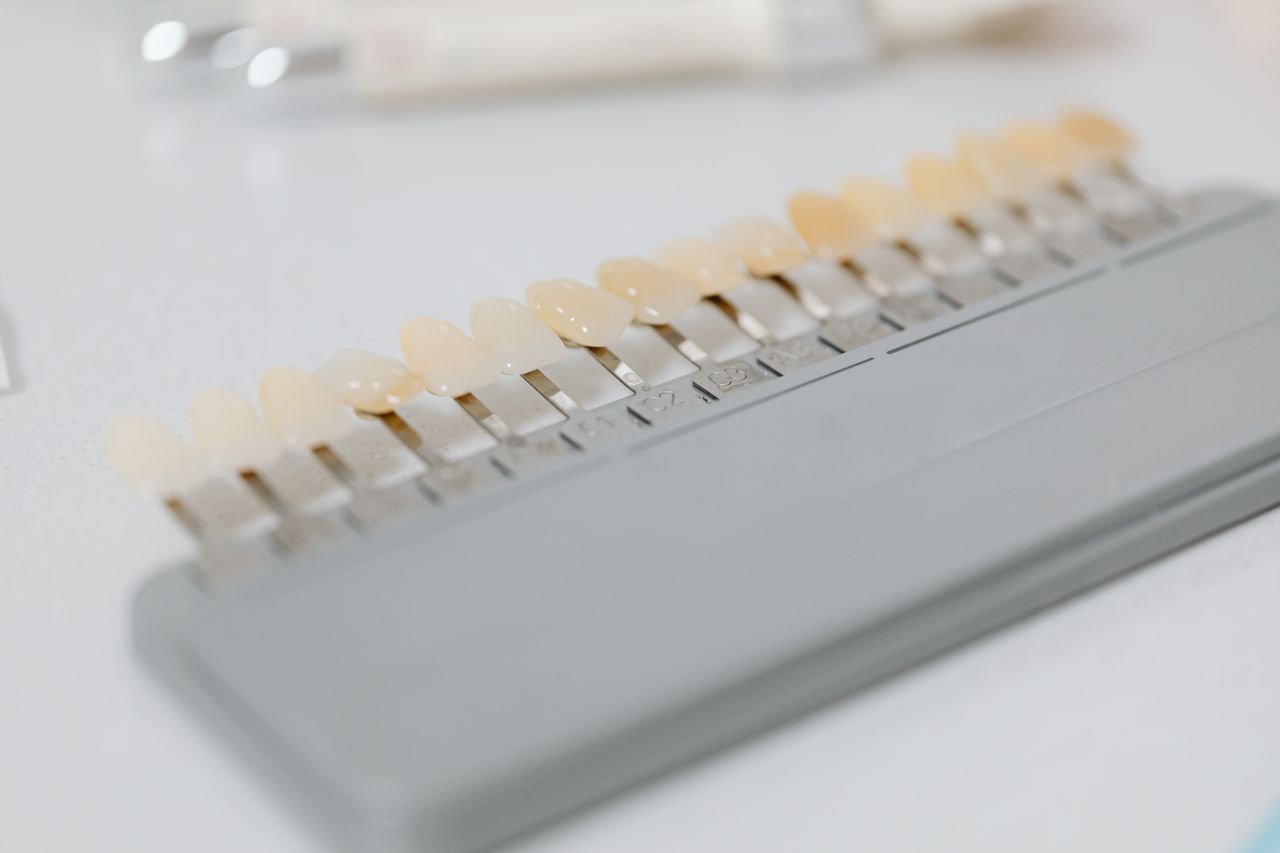
A veneer covers only the front of a tooth and is mostly about how it looks. A crown covers the whole tooth and is mostly about protecting it. If the tooth underneath is healthy and you want to change its shape, color or length, a veneer is usually the answer. If it's cracked, has a large filling, or has had a root canal, you most likely need a crown.
People mix the two up all the time, and it's understandable. Both are made of porcelain, both are made by a lab, and both can look beautiful. The difference is what's going on with the tooth underneath.
What's the difference between a veneer and a crown?
A veneer is a thin porcelain shell bonded to the front surface of a tooth. A crown is a cap that wraps around the entire tooth, down to the gumline.
- What it covers: a veneer covers the front; a crown covers every side.
- Main job: a veneer changes appearance; a crown holds a weak tooth together.
- How much tooth is reshaped: less for a veneer, more for a crown.
- Best for: veneers suit healthy front teeth with chips, stains, gaps or uneven edges; crowns suit cracked, broken, worn or heavily filled teeth.
- Materials at our office: veneers are porcelain; crowns are porcelain or gold.
How much of my tooth is removed?
For a veneer, usually a thin layer from the front surface, often well under a millimeter, and in some cases very little at all. Dr. Bevan keeps preparation as conservative as he can.
A crown needs more room, because it has to be thick enough all the way around to handle chewing. That means shaping every side of the tooth.
Either way, enamel doesn't grow back, so both are long-term decisions. It's also why we don't crown a healthy tooth just to change how it looks.
When a crown is the better choice
- A crack that runs across the tooth or through a cusp
- An old filling that takes up most of the tooth
- A back tooth that's had a root canal
- Teeth worn down from years of grinding
Here's the key point: a veneer is bonded to the front only. If the tooth behind it is cracked or hollowed out by a big filling, the veneer won't hold it together, and the tooth can still break. A crown wraps it and spreads the bite force. If grinding caused the damage, we'll usually suggest a night guard as well, so the new crown doesn't take the same beating.
When a veneer is the better choice
- Chipped or worn edges on front teeth
- Deep stains that whitening can't lift
- Small gaps or teeth of uneven length
- Teeth that are an odd shape or look too short
If the main issue is that teeth are crooked, it's worth asking whether Invisalign could straighten them first. Sometimes moving teeth into place means you need fewer veneers, or none.
Can you mix veneers and crowns?
Yes, and it's common in a smile makeover. One front tooth might need a crown because of an old root canal, while the teeth next to it get veneers. The tricky part is matching them, since porcelain over a darker crowned tooth can look different from porcelain over a healthy one. Planning the shade and shape together, and having the lab make them as a set, is what makes them blend.
If you'd like your teeth whiter overall, do whitening first. Porcelain doesn't change color with whitening, so we match your veneers or crowns to your new shade, not your old one.
How long do veneers and crowns last?
Both can last many years when they're made well and looked after. Grinding, chewing ice and skipping cleanings are what usually shorten their life. Our crowns are handcrafted by experienced labs, including Avondale Dental Laboratory, and come with a 2-year warranty. For more detail, read How long do dental crowns last?
If you're weighing a smaller fix, our post on veneers or bonding compares those two.
Common questions
Can I get a veneer on a tooth with a big filling?
Sometimes, if the filling is small and on the back or side of the tooth. If a filling takes up most of the tooth, a crown is usually the safer choice.
Do veneers ruin your teeth?
Not when they're planned carefully and prep is kept conservative. They're still a long-term commitment, because the enamel that's reshaped doesn't grow back.
Can a back tooth get a veneer?
Rarely. Back teeth take most of the chewing force, so a crown, in porcelain or gold, is usually the better fit.
Do I always need a crown after a root canal?
Back teeth usually do, because they become more brittle after treatment. Front teeth sometimes don't. We'll look at how much healthy tooth is left before recommending one.
Which looks more natural, a veneer or a crown?
Both can look completely natural. Careful planning of the shade and shape matters more than which one you get.
Not sure which one your tooth needs? Book a free online consult and talk it through from home, or ask about a free second opinion if another office has already given you a plan. Call us at (707) 255-3007 or visit our contact page.